

The progress around artificial intelligence in the enterprise has shifted dramatically recently. We are moving past basic chatbots and predictive analytics into the era of Agentic AI. The experiments are behind us and for the first time, tangible and verifyable results are within reach.
Workday is pushing heavily into this next generation of technology, introducing specialized Payroll AI Agents and Developer Agents designed to autonomously execute complex workflows.
However, any AI agent is only as good as the tenant data it interacts with and the clear objective it has been given. If your underlying foundation is messy, an automated agent will simply make mistakes faster and at a larger scale. To leverage this new wave of automation, organizations must first ensure their core data is correctly structured and pristine. This is where a HR Data Cleanup come in.
The Shift from RPA to Autonomous Agents
For years, organizations relied on Robotic Process Automation (RPA) to handle repetitive tasks. While useful, RPA is inherently rigid; it follows strict, hard-coded rules and breaks the moment a user inputs data unexpectedly.
Agentic AI operates differently. Instead of following a fixed script, these agents understand intent. They can analyze a request, reason through the necessary steps, and dynamically adapt to changing conditions. In a Workday ecosystem, this means an agent could autonomously flag a payroll anomaly, cross-reference it with a worker’s compensation history, and initiate a correction. But for the agent to reason correctly, the rules and data it relies on must be flawless.
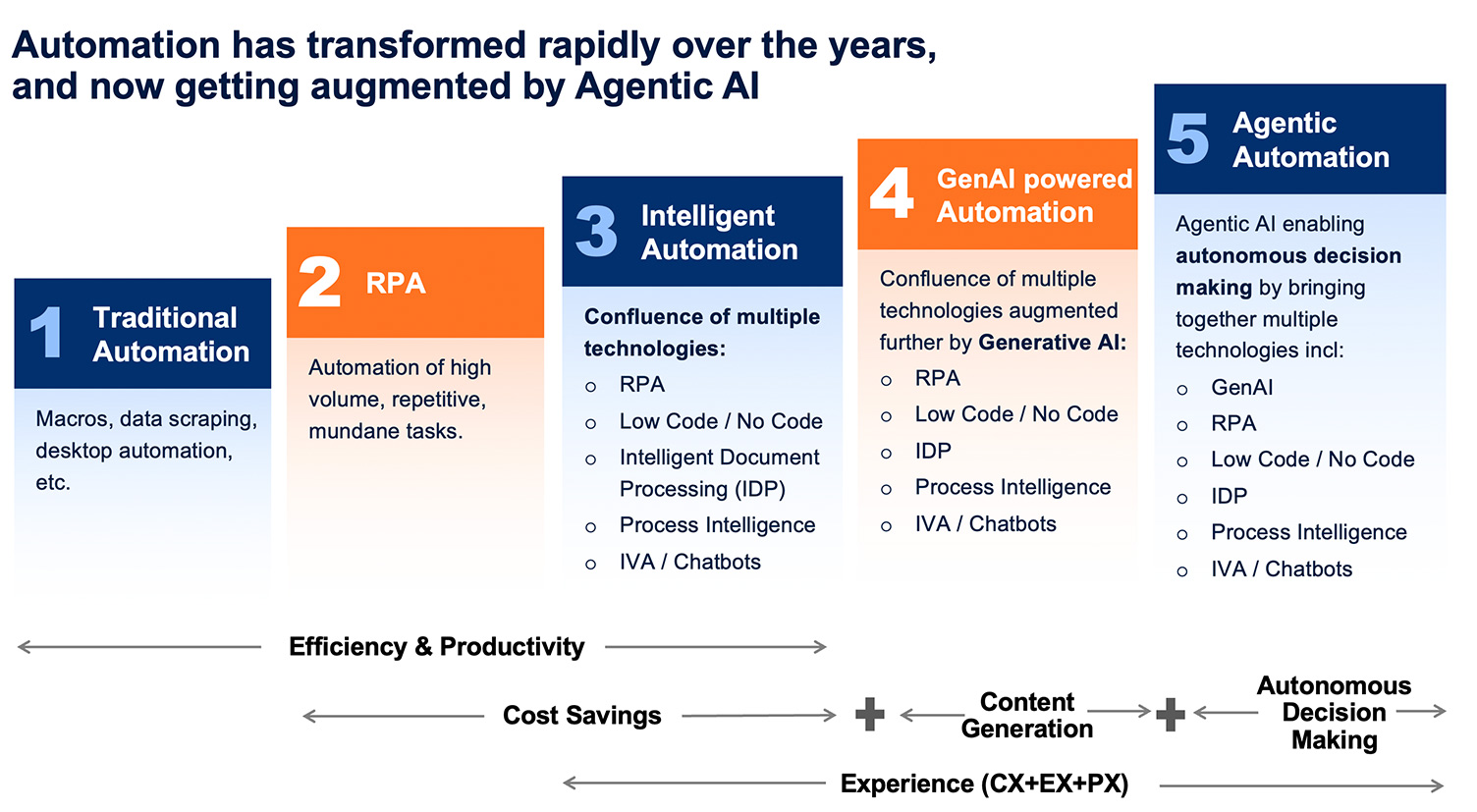
Figure 1: Automation’s Evolution from Intelligent to Agentic Source: Persistent
The Clean Data Mandate: Back to Basics
Before turning on Workday’s new AI capabilities, you must look closely at your foundational setup. AI agents rely on your existing configuration to understand relationships, permissions, and routing.
To ensure your tenant is AI-ready, focus on auditing and cleaning up these three critical areas:
- Supervisory Organizations: Agents look at your Org structure to understand who reports to whom and where boundaries lie. Overlapping orgs, vacant manager positions, or broken hierarchies will confuse the agent’s reasoning engine.
- Business Process (BP) Hygiene: If your BPs contain redundant approval loops, outdated condition rules, or abandoned steps, an AI agent might inadvertently trigger unintended actions or get stuck in a processing loop.
- Job Profiles and Worker Data: Standardized data fields are essential. If job profiles are inconsistent or custom text fields are used where structured data should live, the agent will struggle to categorize workers accurately.
The Client’s Strategic Role in Data Governance
It is easy to assume that technology can fix technology. While automated testing tools and scripts are excellent for catching technical bugs or broken syntax, they cannot validate your business intent or be relied upon solely for HR Data Cleanup.
Your internal HR and IT teams must own the business logic. An external script doesn’t know if a specific supervisory structure aligns with your company’s five-year growth plan, or if a unique BP condition accurately reflects a recent policy change. Preparing for Agentic AI requires human oversight to ensure that the data fed into the AI reflects the actual operational realities of the business.
Proactive Enablement for 2026
Preparing for the future of Workday shouldn’t mean falling back on the traditional Application Management Services (AMS) model. The old “log a ticket and wait” approach is too slow for the speed of AI adoption.
At Teamup9, we believe in a different path: Admin Enablement. Instead of just fixing broken processes after the fact, we partner with your internal teams to build long-term capability. We help your administrators audit your current Core HR structures, untangle complex BPs, and master the data hygiene required for Agentic AI.
Don’t just tread water with basic support. Let’s upskill your team to build a proactive, AI-ready Workday tenant. Contact Teamup9 today to learn how our enablement workshops can prepare your organization for the next generation of Workday automation.